Outback: Undara Volcanic NP
Heading west along the Savanna Way from the Tablelands, the dense green forests change to a dry landscape. We entered an area of thicker trees at Forty Mile Scrub NP. The one significant thing we learned from the short interpretive walk is that this is a “dry” rainforest. As explained, from December to April this particular spot gets tons of rainfall from the coastal monsoons especially given its elevation at 800 metres. The rest of the year it gets little rain and, in fact, gets frosty conditions during winter (remember, America, that’s June-Aug). The trees that grow here must learn to survive these extremes so many of them are semi-evergreen meaning they tend to drop their leaves when its dry, allowing them to reduce water loss during this critical time. The concept was intriguing, but worth a NP designation?
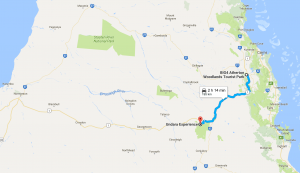
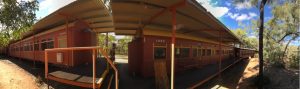
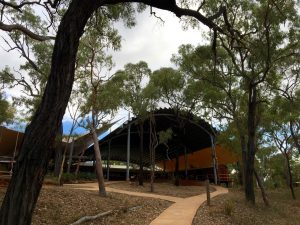
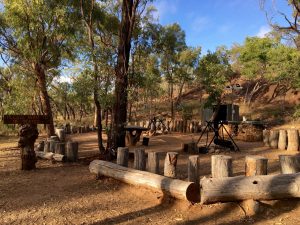
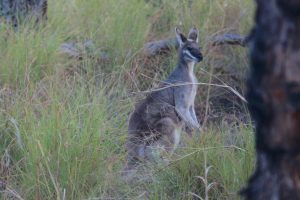
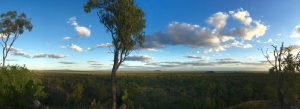
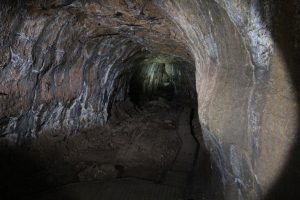
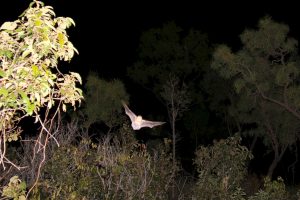
Undara Volcanic NP is off limits to anyone not on one of the Undara Experience tours. The campground/resort near the NP lies in a typical bush setting of gum trees, abundant chatty birdlife, browsing Pretty-faced Wallabies. The hot days end in chilly nights at this time of year. A rim walk around Kalkani crater proved that the region is dotted with volcanic craters (about 190,000 years old). Despite the heat in 30s (90sF) we managed a few of the hiking trails around camp. The resort itself is unique: a number of railroad cars have been converted to small but comfortable accommodation. The restaurant area is in a “bowl” that opens to a bush setting. The Experience offers tours of the lava tubes in the NP but we decided to join only the Wildlife at Sunset tour one evening. Our guide drove us into the part and described the macropods (large-footed animals) we saw as we drove, consisting of Eastern Grey Kangaroos, Pretty-faced Wallabies and Walaroos. Our guide described a reproduction cycle that was fascinating. According to wikipedia, a fertilized egg will develop into a neonate and emerge in 33 days. Only 1-inch long (3 cms) the joey will take a few minutes to climb into the pouch where it fastens onto one of the four teats and starts to feed. Almost immediately, the mother’s sexual cycle starts again. Another egg descends into the uterus and she becomes sexually receptive. Then, if she mates and a second egg is fertilised, its development is temporarily halted. Meanwhile, the neonate in the pouch grows rapidly. After about 190 days, the joey is sufficiently large and developed to make its full emergence out of the pouch, after sticking its head out for a few weeks until it eventually feels safe enough to fully emerge. From then on, it spends increasing time in the outside world and eventually, after about 235 days, it leaves the pouch for the last time. Ian told us that she can have one in the womb, one in the pouch and one hopping along next to her at the same time. Wow! The main event that evening was the microbats that were flying out of a cave when Ian shone a flashlight inside for a few moments at a time. The presence of bats in the area keeps the insect population down and we weren’t plagued by flies and mozzies while we were at Undara. Wow again!
2 thoughts on “Outback: Undara Volcanic NP”
I know the bats keep down the bug population, but UGH! Again, your travels amaze me!
Continue to explore and enjoy!
Carol
Love the railroad car lodging … and, of course, your wonderful “critter” photos!